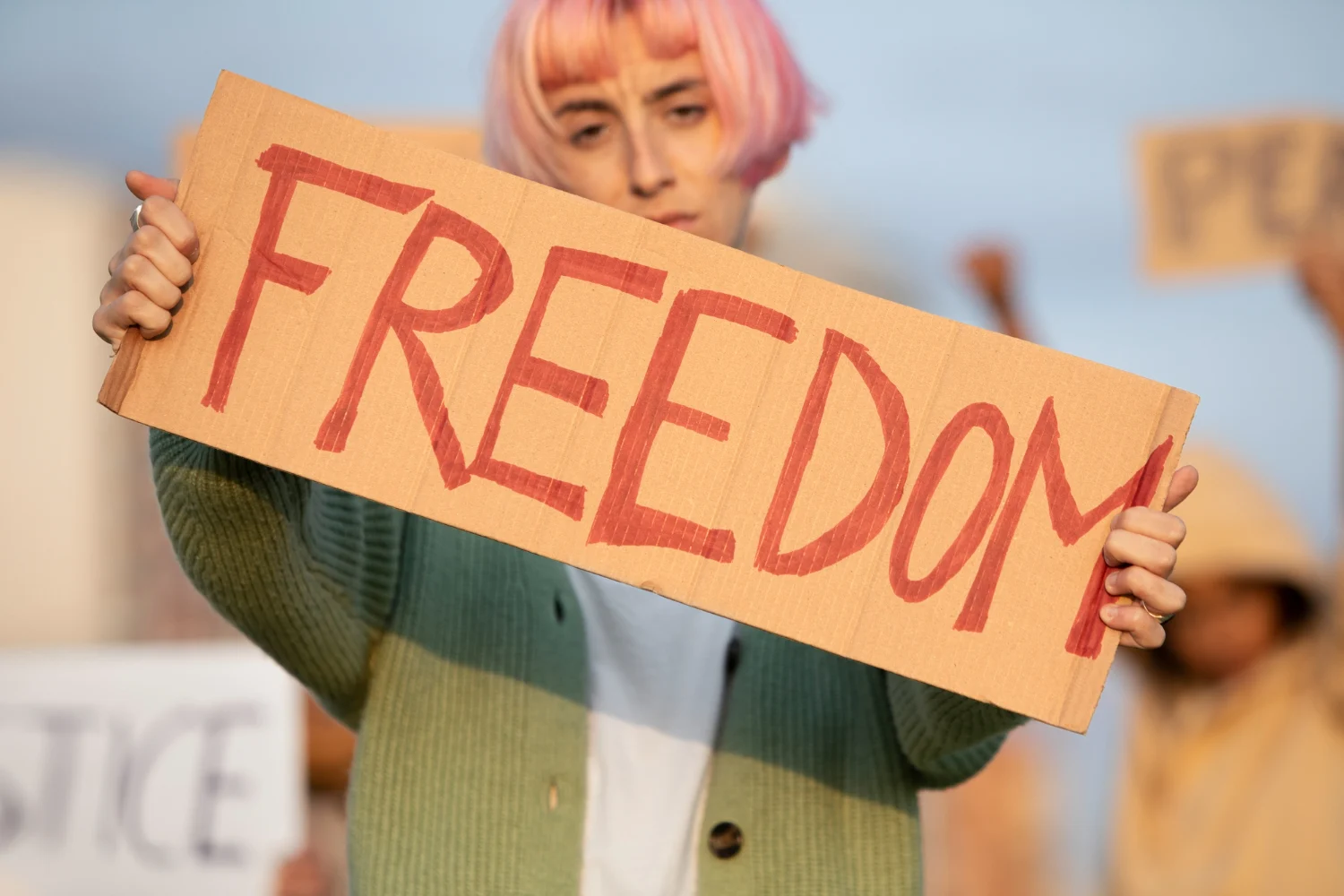
Freedom of assembly is one of the five rights protected by the First Amendment. It gives you the legal right to gather with other people for peaceful purposes, including protests, marches, rallies, and political organizing.
This right is not a privilege granted at the government’s convenience. It reflects a core principle rooted in natural rights philosophy: the freedom to associate with others is a fundamental human freedom, not a gift from the state.

What the First Amendment Actually Protects
The First Amendment says Congress shall make no law abridging the right of the people peaceably to assemble. That language is deliberate. “Peaceably” is the key qualifier.
The government cannot prohibit peaceful gatherings simply because it dislikes the message, the group, or the cause. Content-based restrictions on assembly are constitutionally suspect and subject to strict legal scrutiny.
What the government can do is regulate the time, place, and manner of assemblies within narrow limits. A city can require permits for large marches on public streets. It cannot use the permit process to selectively block disfavored viewpoints.

How Freedom of Assembly Connects to Civil Liberties

Assembly as a Civil Liberty
Freedom of assembly is a civil liberty, a protection from government interference with your individual rights. It sits alongside freedom of speech, freedom of religion, and the right to petition the government in the First Amendment framework.
The Relationship to Civil Rights and Liberties
Throughout American history, freedom of assembly has been used as a tool to advance civil rights and liberties. The civil rights movement relied heavily on organized public protest to expose injustice and pressure legal reform. The right to assemble and the right to equal protection under the law reinforce each other.
Separation of Church and State and Assembly
The free exercise clause, which underlies separation of church and state, also connects to assembly. Religious groups have full protection to gather for worship and religious practice. Government cannot single out religious assemblies for restrictions that do not apply to comparable secular gatherings.
The Legal Limits of Freedom of Assembly
Freedom of assembly is broad, but not unlimited.
The government can restrict assemblies that turn violent. It can require advance notice for very large public events. It can enforce general rules about noise, traffic, and public safety that apply equally to all groups.
What it cannot do is selectively restrict assemblies based on the political or ideological viewpoint of the participants. Viewpoint-based restrictions on assembly violate both the First Amendment and the natural rights foundation that American civil rights and liberties are built on.
Understanding where those limits fall gives you a clearer picture of what your rights actually cover and how to exercise them effectively.